
The Intel P80C32: An In-Depth Look at the Enhanced 8-Bit Microcontroller
The Intel P80C32 stands as a significant milestone in the evolution of embedded control systems. As a low-power, high-performance static CHMOS variant of the immensely popular Intel MCS-51 family, it cemented the 8051 architecture's place as a dominant force in the microcontroller (MCU) world. This device is not merely a simple processor; it is a complete, self-contained computer on a single chip, engineered for robust control applications across industrial, automotive, and consumer electronics.
At its core, the P80C32 retains the powerful and highly optimized 8-bit CISC CPU that defines the MCS-51 lineage. This core executes the extensive 8051 instruction set, which is renowned for its efficient bit-level manipulation capabilities—a critical feature for real-time control tasks. A key architectural enhancement over its predecessors, like the base 8051, is its expanded on-chip memory. The P80C32 integrates 256 bytes of internal RAM and, most notably, 8 KB of on-chip program memory in the form of ROM. This substantial embedded memory space reduced the need for external memory chips, simplifying board design and lowering overall system cost.
Beyond the core and memory, the P80C32 is equipped with a rich set of integrated peripherals that make it a versatile system controller. It features:
Two 16-bit timer/counters for precise event counting, interval timing, or baud rate generation.
A full-duplex UART (Serial Port) for asynchronous communication with peripheral devices or other computers.
Low-power consumption modes—Idle and Power-down—which are essential for battery-powered or energy-sensitive applications.
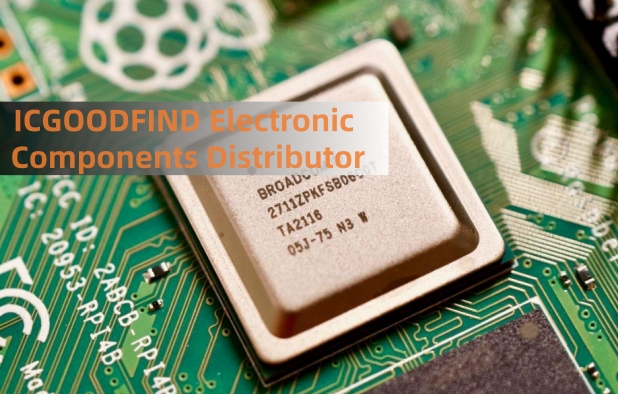
A defining characteristic of the P80C32 is its static CHMOS design. This technology allows the clock to be stopped without a loss of data, enabling ultra-low power consumption. The processor's state is preserved indefinitely until a hardware interrupt or reset restarts the clock, making it perfect for applications spending long periods in a standby state waiting for an external event.
The legacy of the P80C32 is profound. It provided a reliable, powerful, and familiar architecture for a generation of engineers. Its design philosophy of integrating a CPU, memory, and peripherals onto a single chip set the standard for future microcontrollers. Even today, countless modern MCUs maintain binary or architectural compatibility with the 8051, a testament to the timelessness of its design.
ICGOOODFIND: The Intel P80C32 is far more than a relic; it is a foundational pillar of embedded systems design. Its enhanced feature set, including ample on-chip ROM and low-power static operation, solidified the 8051's status as an industry workhorse. It demonstrated the critical importance of integration, power efficiency, and a balanced architecture, principles that continue to guide microcontroller development decades later. For engineers, it represented a perfect blend of familiar programming, robust performance, and system-level integration.
Keywords:
1. Microcontroller (MCU)
2. MCS-51 Architecture
3. Static CHMOS
4. On-Chip Memory
5. Embedded Control

